
Why Remove Cavity Wall Insulation and Clear Cavity Walls?
Before 1995 there was no governing body to regulate the cavity wall insulation industry giving the potential for poorly installed cavity wall insulation e.g. with an incorrect drilling pattern or at the wrong density, this could result in damp and condensation issues.
If cavity wall insulation has been professionally installed to a high standard and the building is well maintained, the insulation should last a long time. However, old materials used in the past can have poor thermal conductivities in comparison to newer materials of today. Here at CES Northwest, we can extract your old cavity wall insulation and install a more up to date insulant such as EPS Bonded Beads. Once the cavity walls have been cleared of old insulation and debris, the cavity will be conditioned to receive new up to date insulation.
Over a number of years, it has been well documented that weather conditions are becoming more severe from one year to the next, therefore buildings that have not been maintained to withstand modern day conditions can experience issues with dated insulation techniques where water penetration causes the insulation to get wet, this breaks down the properties of the insulation with the moisture retained in the within cavity. As the moisture is retained in the insulation, it can travel across into the inner walls forming as damp.
This can happen due to several reasons such as
- If the property is located in a severe or high exposure zone
- Poorly installed leaving voids in the insulation therefore creating a cold spot which leads to condensation on internal walls and a platform for mould growth
- Cavity not clear prior to installing insulation therefore leading to capillary action
- Incorrect density of insulation
- Cavity width too narrow allowing capillary action
- Porous brickwork/mortar joints and/or poor render condition allowing moisture ingress
- Impact, flood, fire, escape of water and subsidence damage
Cavity Blockages
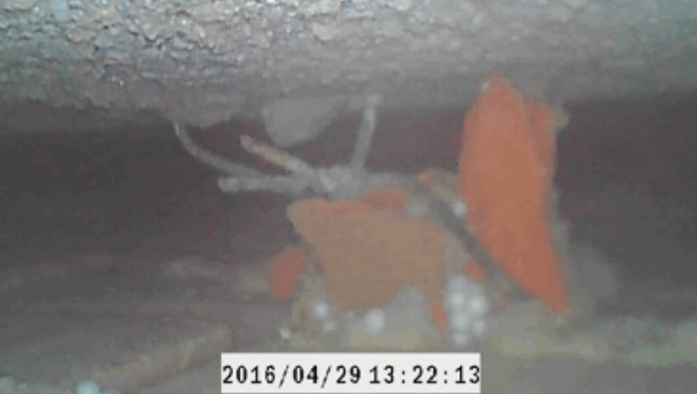
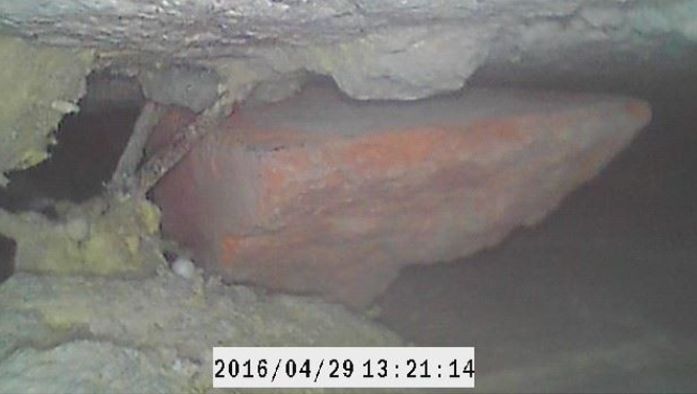
Debris that has fallen into the air-space (cavity) can create a platform for moisture to travel across and penetrate the inner Wythe (vertical layer) resulting in damp and sometimes the formation of fungi and mould growth visible on the inner of the exterior walls. Debris/obstructions can also build up at the bottom of the Cavity and allow moisture to transmit upwards through the obstructions also resulting in damp and the formation of fungi and mould growth visible on the internal walls: This is called Capillary Action.
A pre-requisite to install cavity wall insulation that the cavity must be free of significant blockages such as debris and rubble. Since the inception of cavity wall construction, properties have been identified as having minor and sometimes major blockages/obstructions within the airspace (cavity).
The causes for these obstructions can include but are not restricted to:
- When the dwelling was constructed, the cavity was not cleared correctly prior to sign-off
- Alterations to the dwelling i.e. extensions, walls removed, wall tie replacements etc.
- Cavity exposure – normally through window / door replacement or conservatory installation
- General improvements / repairs – fitting of balanced flue boiler systems / vents being installed
- Replacement of wall ties allowing inward motion of debris / rubble into the cavity
In some circumstances, the process and installation of cavity wall insulation can have the same effect of installing wall ties. As the outer wythe is drilled, there is always the possibility of brick parts and mortar to enter the cavity itself. Once this debris / obstruction has fallen into the air-space (cavity) it could create a platform for moisture to travel across and penetrate the inner wythe (vertical layer) which can result in damp and subsequent formation of fungi and mould growth visible on the inner of the exterior walls.
Debris / obstructions can also build up at the bottom of the cavity and allow moisture to transmit upwards through the obstructions which can also result in the formation of damp leading to fungi and mould growth visible on the internal walls.
The problem of either bridging or transmission can occur whether the cavity wall is filled with insulation or not. It is important to note that it is not always as a direct result of having cavity wall insulation installed. However, by having CWI installed in a cavity where there is risk of obstructions, this can expedite a potential problem and enhance the risk of cold-bridging and capillary action.
Below are a few images of rubble and debris in masonry cavity wall constructed properties that can cause capillary action (the transferal of moisture) and cold bridging:
The problem of either bridging or transmission can occur whether the cavity wall is filled with insulation or not. It is important to note that it is not always as a direct result of having cavity wall insulation installed but if it has been installed incorrectly, it can:
- Reduce the value of your property
- Can cause major structural problems
- Reduce heat retention and increase fuel consumption
- Make your walls wet inside and out
- Affect your health
The only way to ensure that a property suffering from problems of this nature is for the air-space (cavity) to be completely cleared of all obstructions, debris and any existing cavity wall insulation. Wet Insulation material provides no Thermal benefit and can increase your fuel bills in the drying process.